

Farm Security Camera Systems — How to Choose the Best One
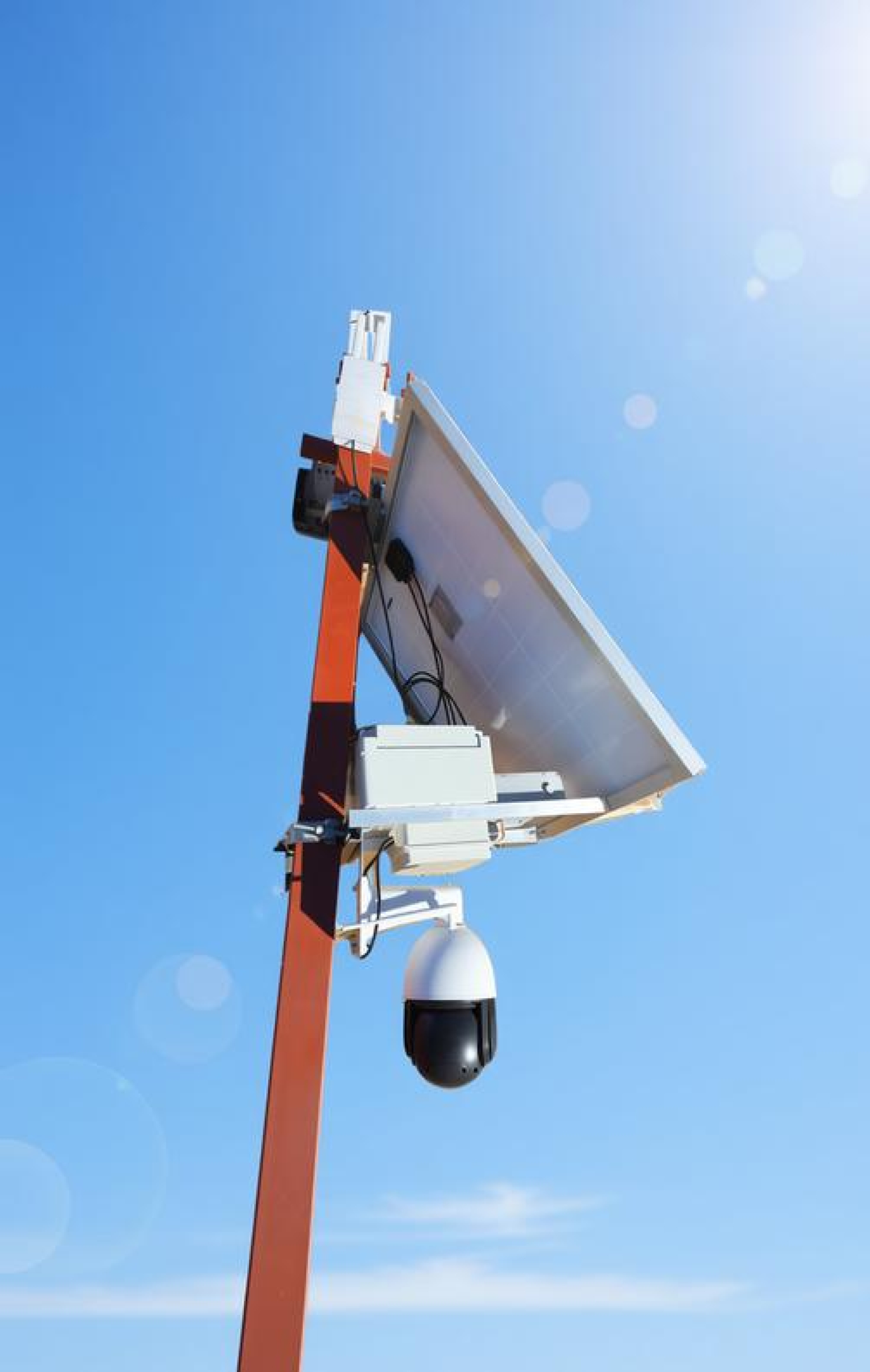
If you live on a smallholding or farm, your security needs are different: long distances, dark areas, load-shedding, and lots of “noise” (dogs, insects, moving branches) that can cause false alarms. The good news is you don’t need a complicated system — you need a system designed around the places people must pass through, and cameras chosen for the job.
Take these factors into consideration when choosing the correct security camera system for your farm:

Your first question is to decide what your aim is: self-protection, protection of property, or a combination of both. CCTV cannot and should not replace an alarm system. An alarm system is designed to reduce false alarms and give you advanced warning. A CCTV system is used to give you a view and record your environment. Don’t try to use a CCTV system as an alarm. Banks don’t expect their CCTV system to replace their alarm systems, and neither should you.
If self-protection is the aim, then I strongly recommend using at least one indoor camera as part of your system. Indoor cameras are very accurate at detecting an intruder and typically give the least false alarms. A camera placed in a “must pass through” area (like a passage leading to bedrooms) can give you that vital warning and edge. Another practical use is before you enter the home after being out — you can check inside the home to establish if it’s safe before getting out your car. If you’re inside the home and you hear something, you can check if it’s safe before opening a passage or bedroom door. It’s inexpensive and effective.
For protection of property, decide what you are trying to protect and design your system to not only watch the equipment, but also the pathways or routes that lead to it. On farms and smallholdings this usually means: gates, driveways, doors to sheds/workshops/pump rooms, and high-value areas like diesel tanks.
For stock theft, a PTZ correctly placed and used can help confirm where and what is happening — but it should not be expected to give you advanced warning across large open areas. Most people have unrealistic expectations, like expecting one camera to reliably “pick up a person” hundreds of meters away at night while tracking them across a farm. The cost of doing that properly is prohibitive, and even good cameras still need the right placement and the right field of view to be reliable.
Important misconception: accurate detection is not the same as IR distance (or even good daytime video). IR specifications tell you how far infrared light may reach under ideal conditions. Reliable human/vehicle alerts depend on having enough detail on the target (pixel density), the lens choice (wide vs tighter view), and real-world conditions like dust, mist, rain, insects and moving trees. The solution is simple: protect choke points properly and use the right camera for each area instead of chasing “big numbers” on a spec sheet.
You can make use of a pure PoE system, Wi‑Fi, or mix them up — you’re not limited to one architecture. That’s the beauty of Foscam. Even Wi‑Fi cameras can often be used with traditional network cable, but it’s sometimes costly or near impossible to run cable to where you want a camera.
That’s when Wi‑Fi allows you to be more creative and flexible — but keep in mind you still need power for the camera. For example, if you want a camera at the farm gate and you already have a gate motor, you often already have power (mains or solar/12V depending on the setup). The next challenge is getting signal back to the farmhouse, which can be solved with the right long‑range Wi‑Fi link (line of sight) or a mesh setup around the house area.
If you need a free‑standing off‑grid solar solution then read our article here.
A big mistake I often encounter is camera placement. All too often cameras are mounted on high poles to “see more”. The problem is that it reduces your ability to accurately detect relevant movement, the angle is wrong, and the distance becomes so extended that all you can really tell is that “someone was there”. Placement should be well thought out for the purpose the camera is being used for.
A better approach is to aim cameras along strategic routes at practical heights, focusing on choke points where people must pass. One camera can’t be all things.
PTZ cameras are popular because you can theoretically cover a large area with one camera, but I often prefer two or three bullet cameras (often the same cost or less) for these reasons:
- You always have dead zones (the PTZ is looking the wrong direction when the incident happens).
- Putting a PTZ on constant cruise is a bad idea: it wears the gears/motor, and motion detection is unreliable while the camera is moving.
- Auto tracking has its place, but don’t rely on it as your only plan — multiple targets and background movement can cause problems.
- Zoom doesn’t mean you “see more” all the time. When you zoom in, you focus on a smaller area and reduce your viewing angle — so use zoom as a tool, not a strategy.
Use a PTZ for situational awareness — the big picture. It gives you the ability to scan 360 degrees and zoom in when you want to check something. Use bullet/fixed cameras for constant coverage of critical areas like gates, roads, doors, and diesel tanks.
New feature worth using: many of the newer bullet cameras and smaller PTZ models include built‑in LED spotlights and a local siren. When configured correctly, this can help “frighten” an intruder away and make it obvious they have been spotted — without you having to go outside. The key is correct placement and smart detection rules (human/vehicle filtering) so you don’t trigger deterrents for every dog, insect or moving branch.
The Foscam SD4H with 18× optical zoom is a great choice for situational awareness. It’s rated up to 200m IR for night viewing and includes auto‑tracking plus Human/Vehicle alerts. As with any camera, real‑world detection performance depends on correct placement and using the right zoom/view for the area you’re protecting.
1. PoE IP Security Cameras — Wired Farm Security Cameras
PoE (wired) cameras are excellent for farm surveillance. They are easy to install for DIY enthusiasts because power and video run on the same cable. PoE cameras are managed by a PoE switch which provides both power and network signal. Cameras connect to the switch using CAT5/CAT6 cable (commonly up to 100m per cable run).
View our range here: Foscam Outdoor Cameras | NVR’s and Kits
2. Wireless / Wi‑Fi IP Cameras for farm security
If you prefer the wireless route and you have a good signal, take a look at our Wi‑Fi camera range and PTZ options. Most Wi‑Fi models still support a normal RJ45 network connector if you choose to cable them later. Remember: Wi‑Fi solves signal, but you still need power at the camera location (12V, mains, or a properly designed solar solution). Also contact us if you advise as we can supply you with right kind of mesh systems or point to point bridges.
View our range here: Outdoor Cameras | Solar
Important note on small solar PTZ cameras: a small solar PTZ is usually not the right option for large open areas. To keep power consumption low, these cameras typically focus on motion-based recording (not true 24/7 recording), night viewing is usually short-range, and many models are not designed to integrate into a traditional NVR setup. Solar cameras can be useful in the right place, but they’re not a replacement for a full camera system when you need wide-area coverage and continuous recording.
A modern IP camera system can send you a snapshot to email or to your Foscam app when motion is detected. With newer models you can set alerts to only warn you when “Human” or “Vehicle” movement is detected, greatly reducing false alarms. For recording, you can use a microSD card in the camera or (recommended for longer history and multiple cameras) an NVR for central recording.
IP66 rating ensures that cameras can withstand harsh weather conditions. All Foscam outdoor cameras are IP66 — so come rain or shine, the cameras will be fine.
For an extensive camera range, go online www.foscam.co.za and purchase your security camera wherever you live in South Africa. We courier door to door.
Comments : 0